Introduction and Experimental Planning Considerations for RNA-Seq


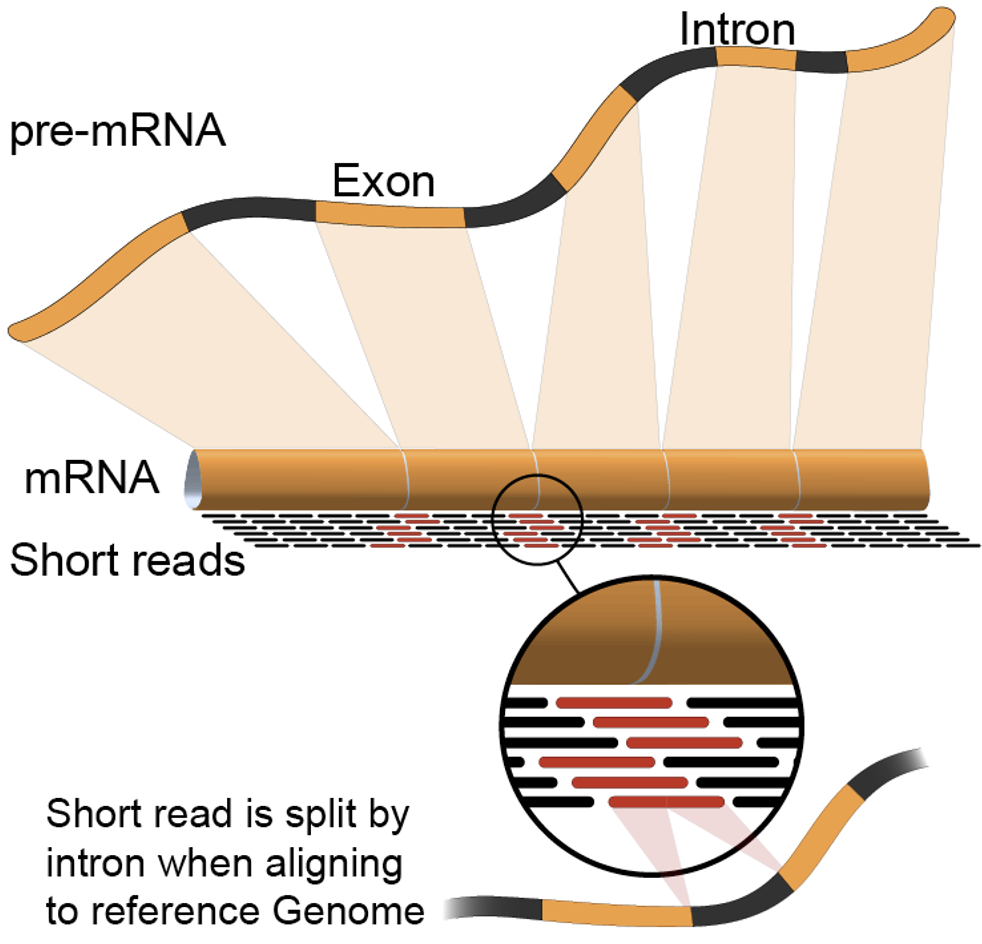
Figure 1

pre-spliced mRNA is spliced, sequenced, and aligned to a genome
RNA Sequencing

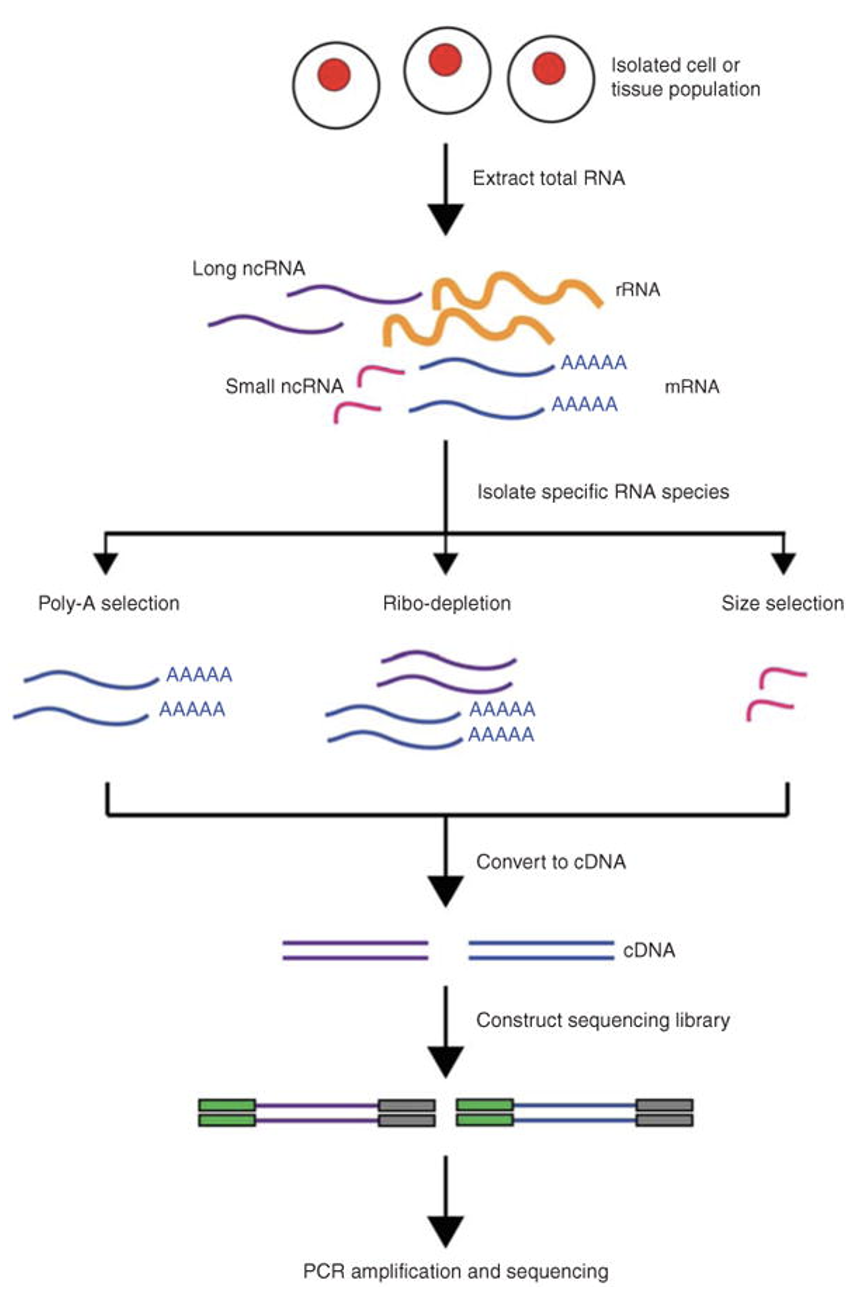
Figure 2

Total RNA is extracted from cells, RNA types can be isolated, then these are reverse-transcribed into cDNA, adapters added, then sequenced
RNA-Seq Workflow Diagram

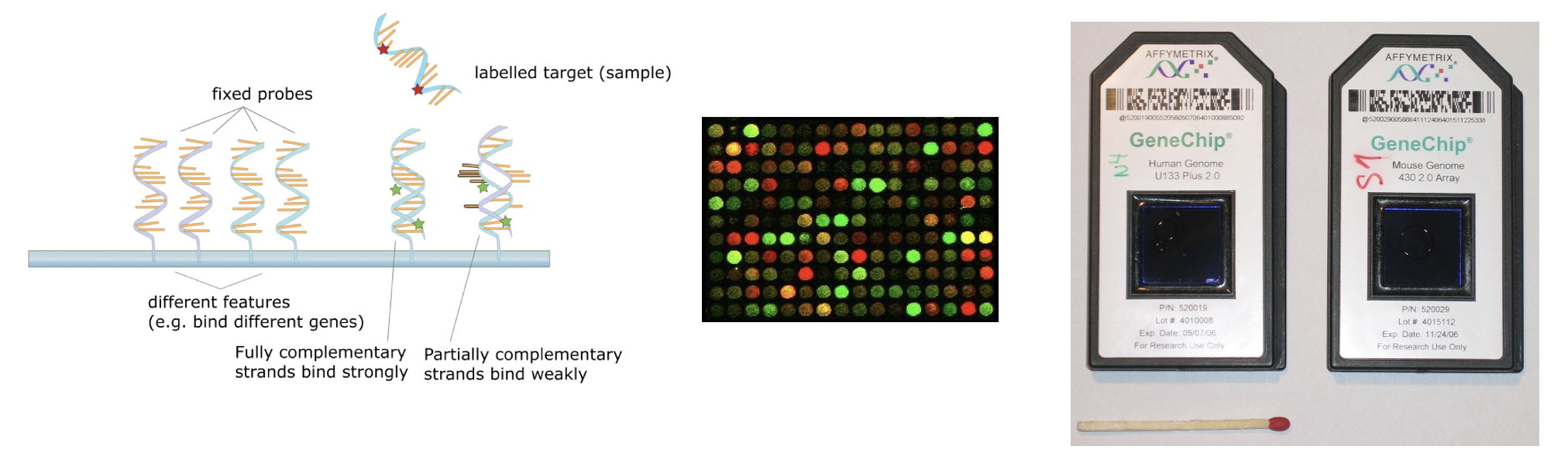
Figure 3

Visualization of microarrays from hybridization to imaging to the whole array
MicroArray

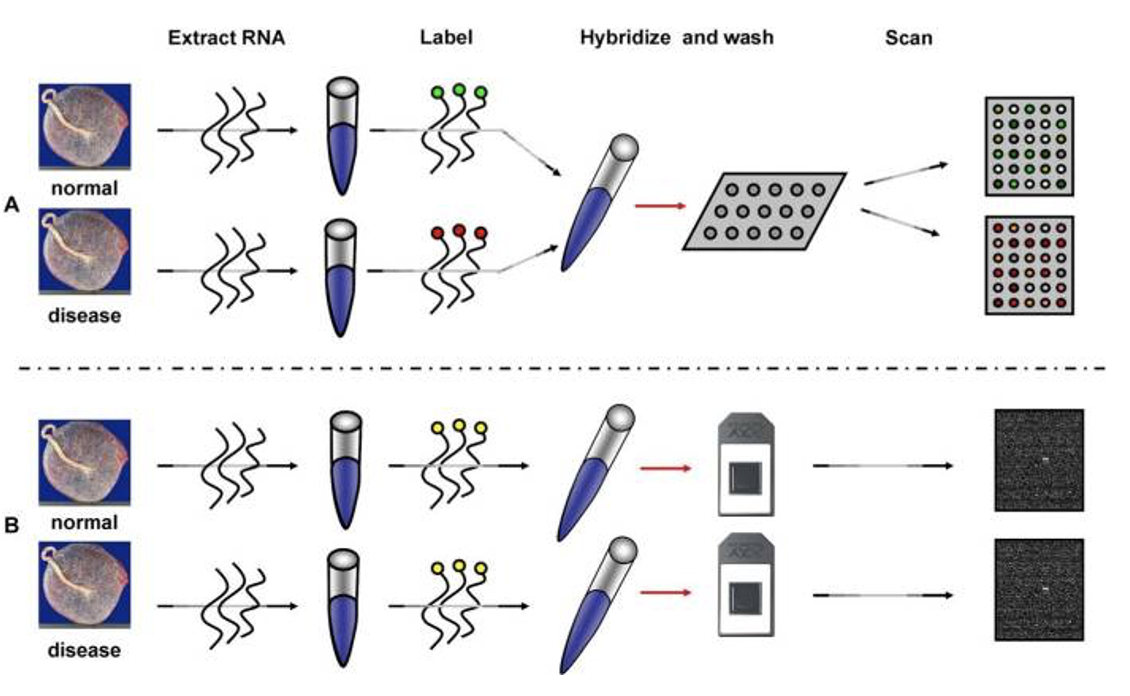
Figure 4

Two possible microarray workflows
MicroArray vs RNA-Seq

Figure 5

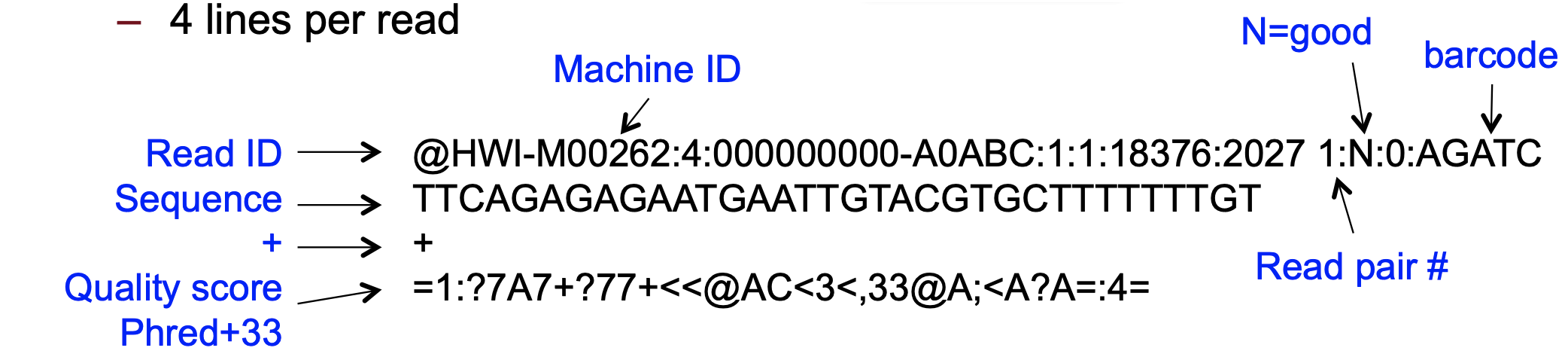
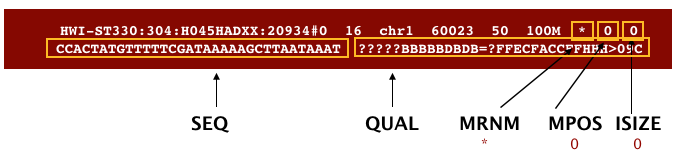
Diagram of fastq format
Fastq format

Figure 6

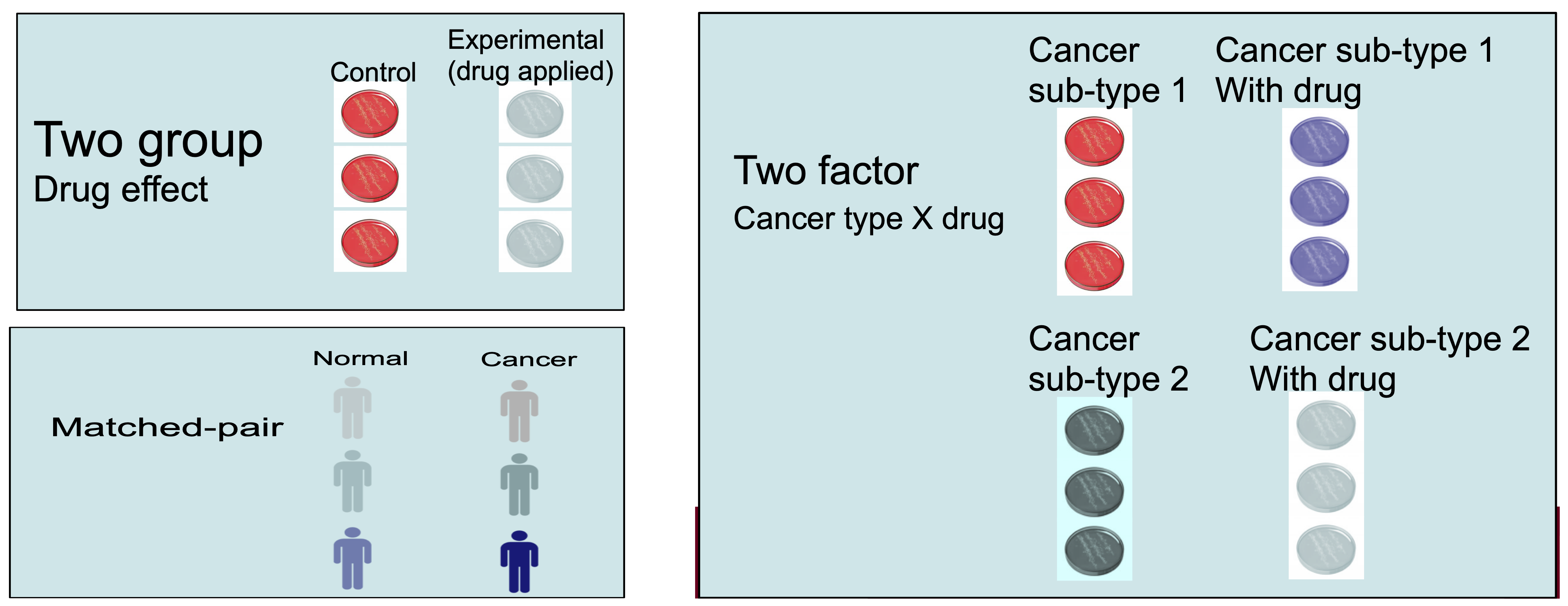
Example case-control experimental design
Experimental Design

Assessing Read Quality


Figure 1

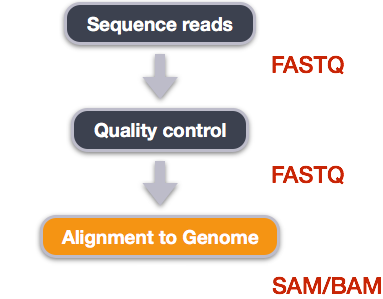
workflow

Figure 2

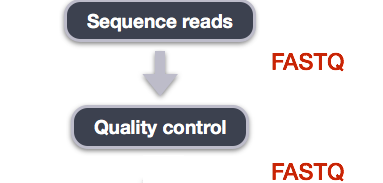
workflow_qc

Figure 3

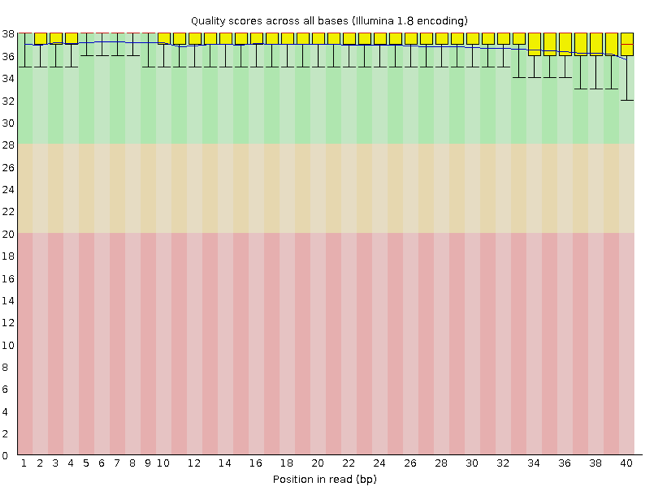
good_quality

Figure 4

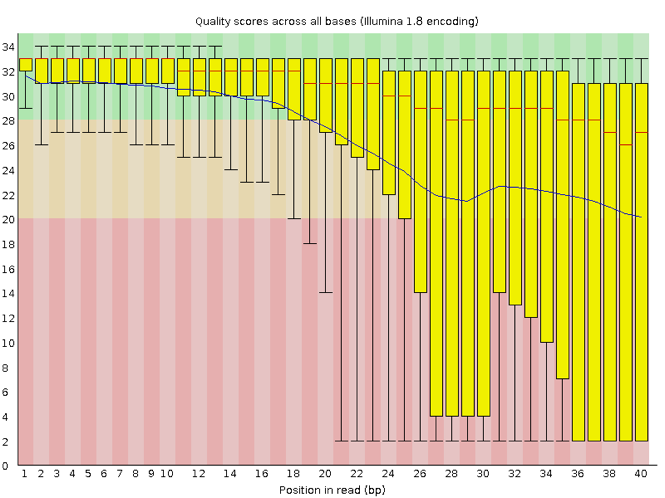
bad_quality

Trimming and Filtering


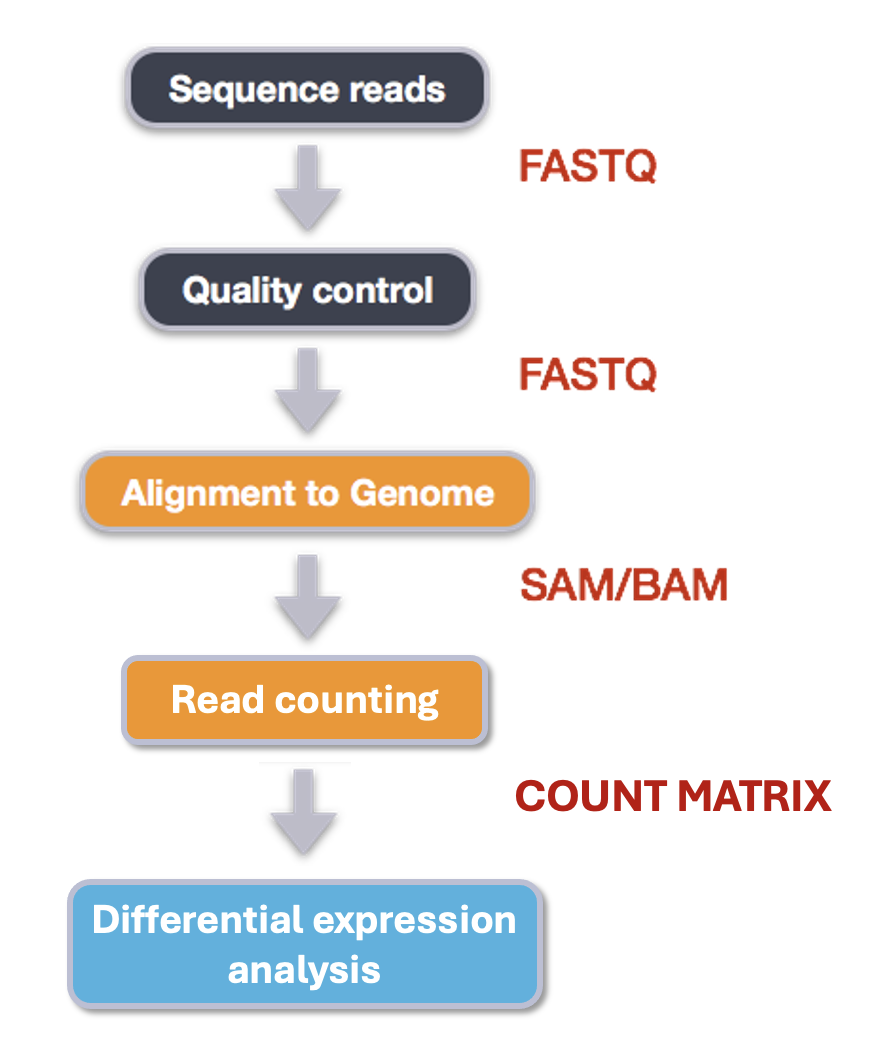
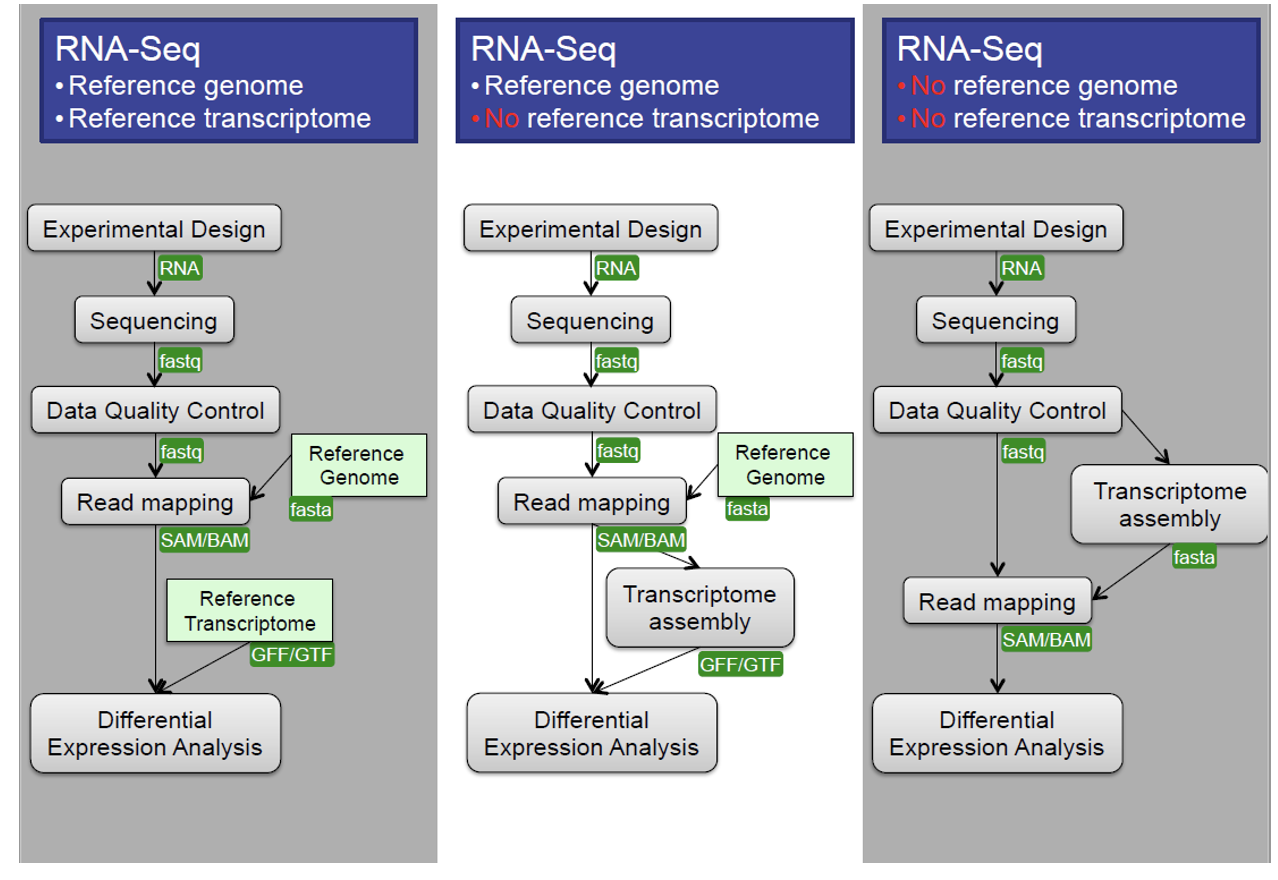
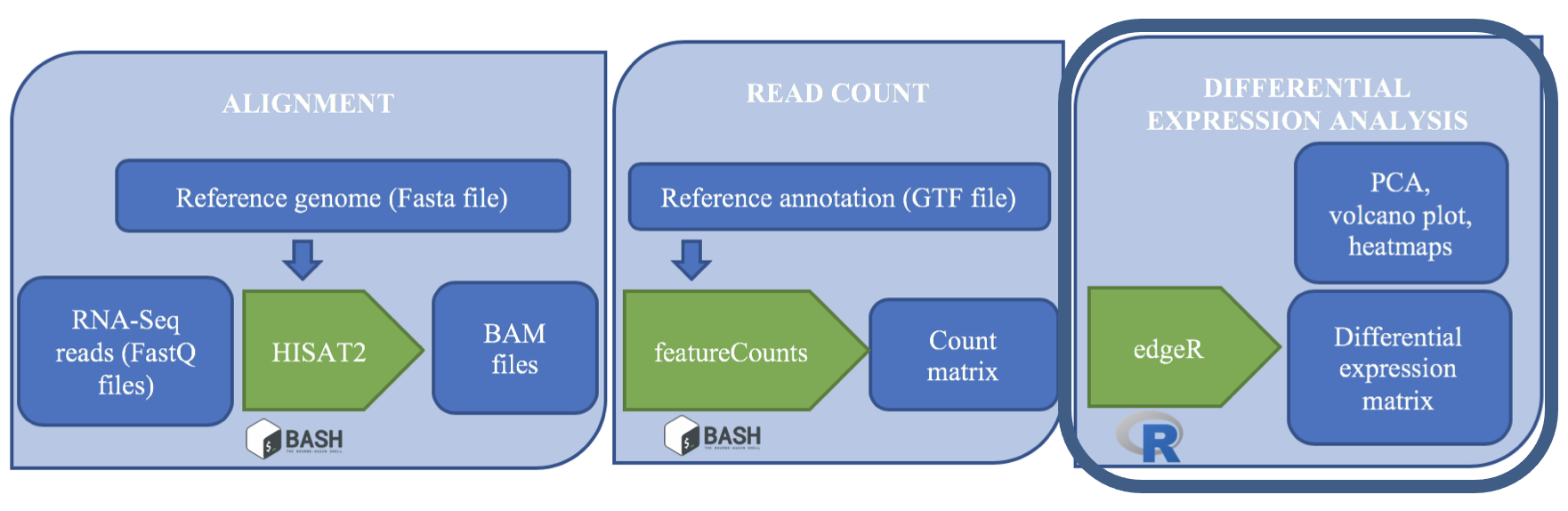
RNA-Seq Workflow


Figure 1

workflow_align

Figure 2

sam_bam1

Figure 3

sam_bam2

Figure 4

workflow

Analyzing Read Count Data


Figure 1

workflow

Figure 2

Three ways to analyze RNA-Seq data
Sequencing Platforms

Figure 3

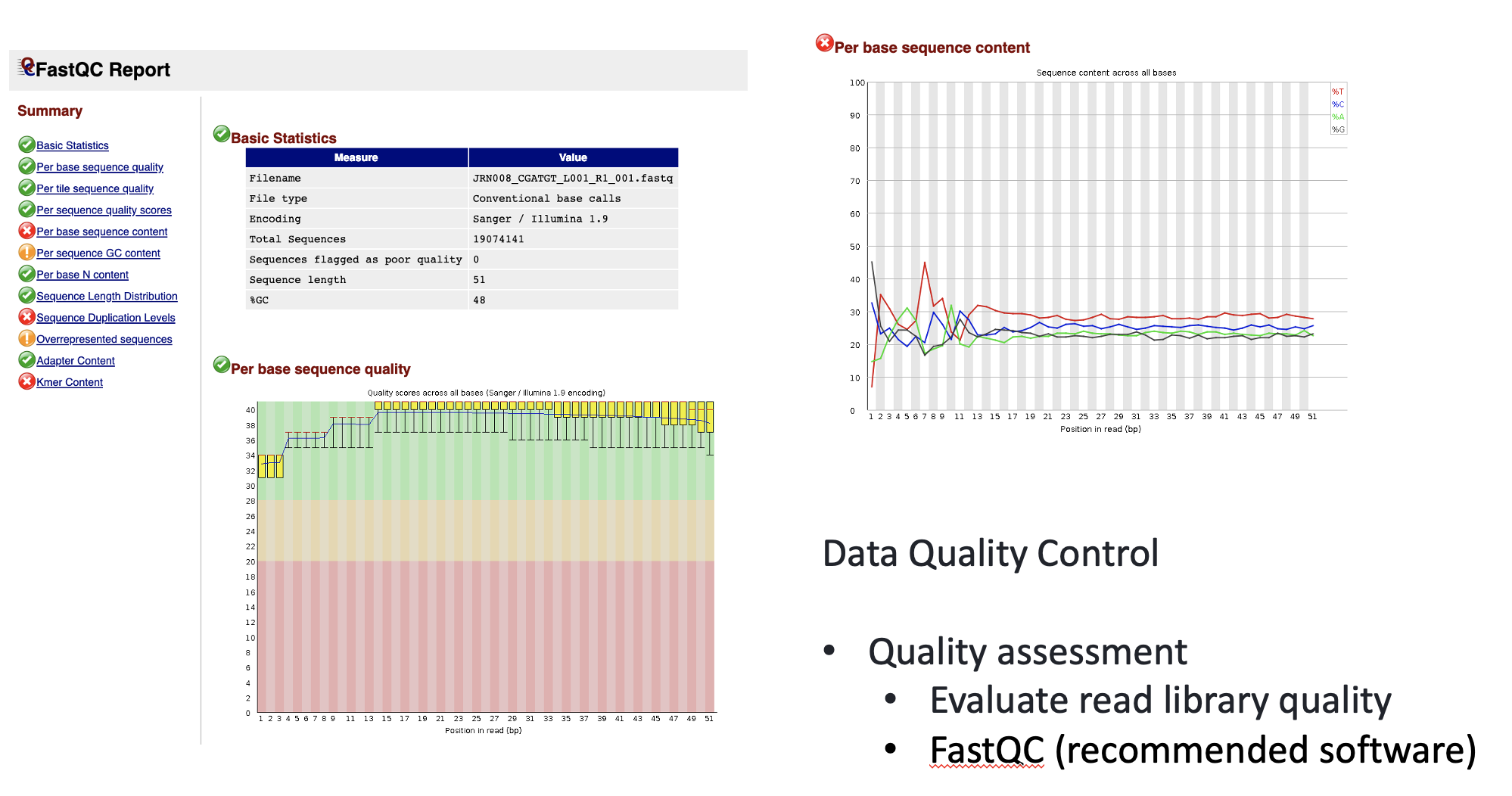
Quality control visuals
Quality Control

Figure 4

Removing unwanted or low-quality sequence
Trimming

Figure 5

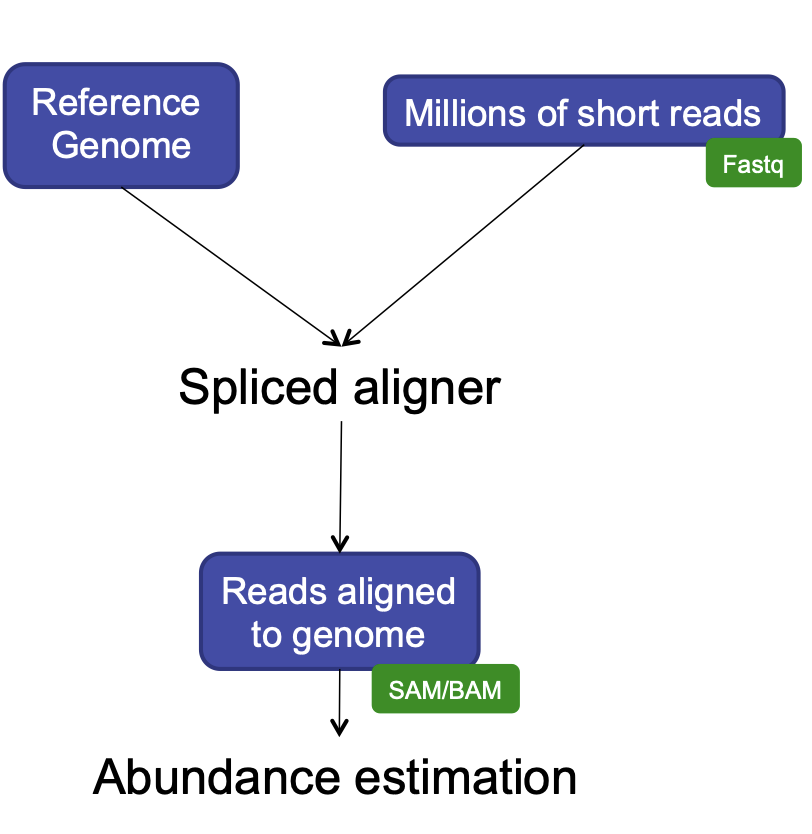
How RNA-Seq data are aligned
Alignment Workflow

Figure 6

hisat2 will identify alternative splice forms
hisat2 Alignment Workflow

Figure 7

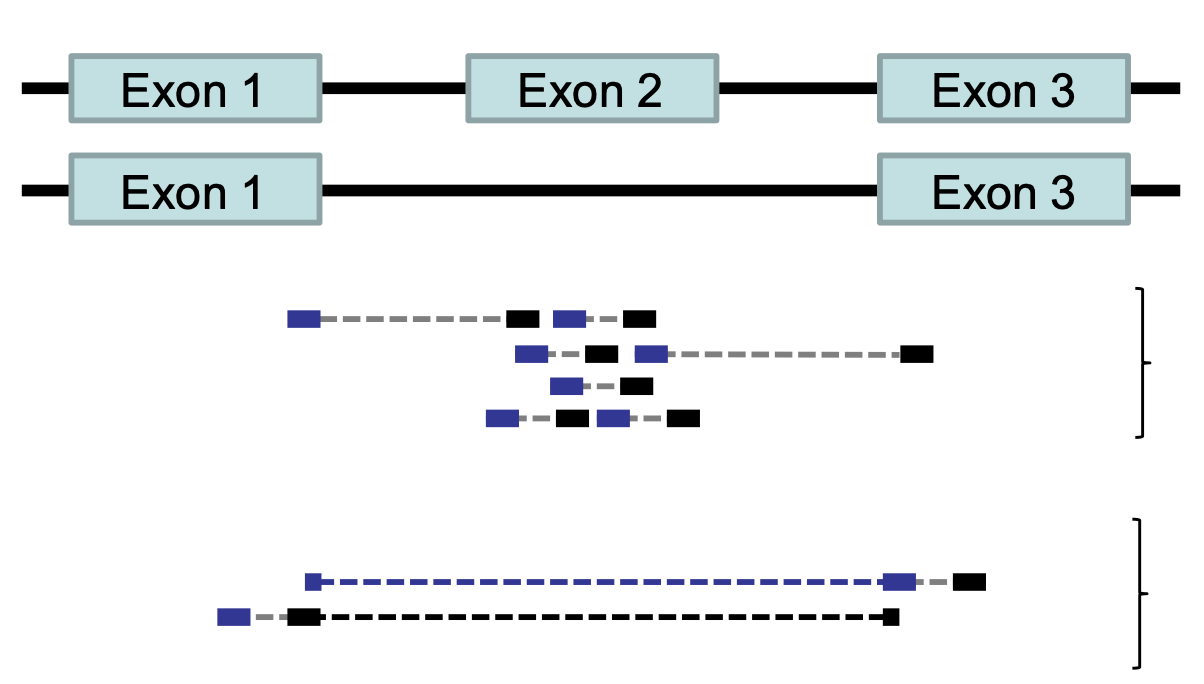
Multiple mRNA molecules can be spliced from the same transcribed sequence
Splice-aware alignment

Figure 8

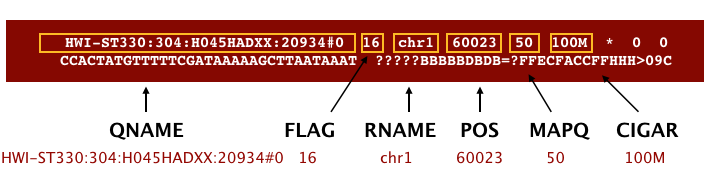
Typical hisat2 output in sam format
Typical hisat2 output (sam formatted)

Figure 9

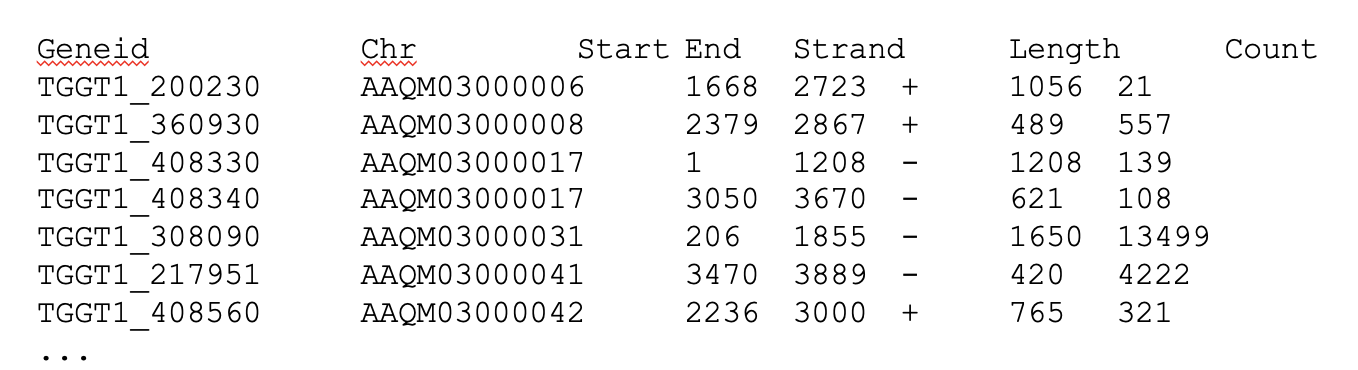
Typical featureCounts output
Table of the number of counts of each gene

Figure 10

Now the workflow moves from bash to R
Differential Expression Analysis

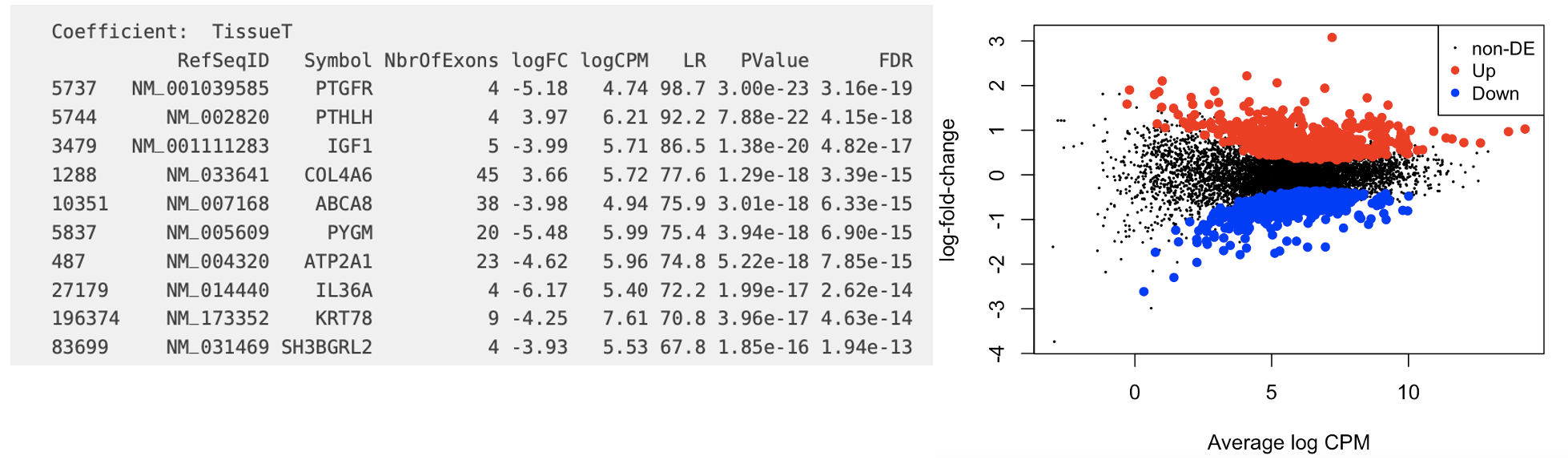
Figure 11

edgeR output shows differentially expressed gene table and a volcano plot
Example edgeR output